Case Studies
-
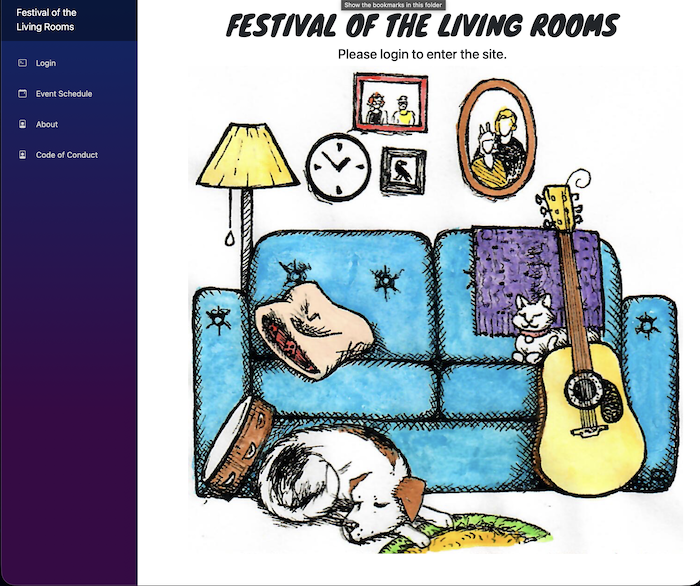
Festival of the Living RoomsFestival of the Living Rooms
-
Anatoliy Torchinskiy, PianistAnatoliy Torchinskiy, Pianist
-
Heather Hall Card GalleryHeather Hall Card Gallery
Festival of the Living Rooms
The Problem:
In the science-fiction/fantasy community, there is a strong tradition of people gathering together in homes and playing music, generally guitar-based and involving science-fiction or fantasy themes. This tradition, named "filk" (due to a typo in an announcement), also involves house concerts and eventually their own conventions.
When the COVID-19 pandemic occurred in 2020, this presented a problem for the community, that is, how to continue the music tradition when people could not gather together. A musician named Blind Lemming Chiffon, along with several others, came up with the idea of performing both individually and as groups on the internet. Eventually, the Zoom platform was selected as the best alternative for the gatherings.
But there were still problems. The schedule for the concerts and circles was published in one time zone, but participants lived around the world, creating conversion issues. Also, the so-called "Festival of the Living Rooms" was by invitation only - one had to obtain the Zoom link (or meeting number and password) through the community. Additionally, there were "Zoom Bombers" present - people who, one way or another, managed to get into the Festival uninvited and caused havoc. Finally, there was not a central point of information or contact for the Festivals.
The Solution:
A centralized website was designed to handle everything from participant authentication, to schedule maintenance, to communications, to even the Zoom experience itself. The website was written on the .NET platform, using C#/Blazor. Authentication is handled by an industry-standard third-party security firm, thus obliviating the need for storing passwords, a security risk.
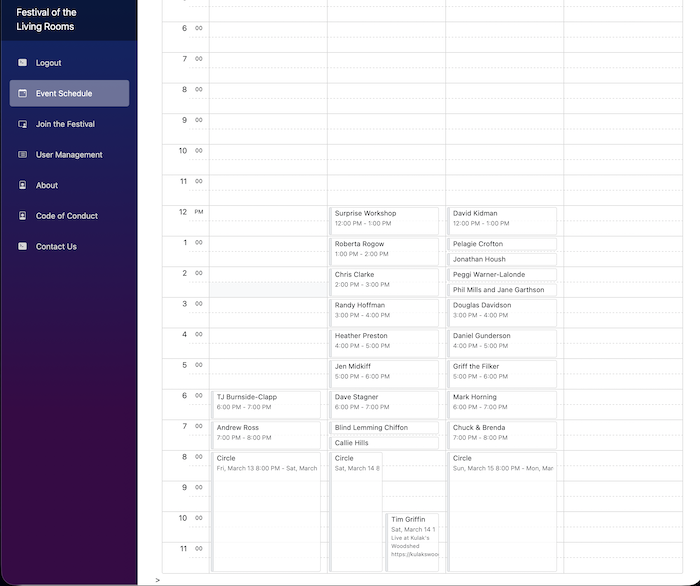
A scheduling component was implemented that would be restricted to weekends, as Festival are only held on those days. The schedule is entered in the administrator's timezone, as read from their browser, but stored in UTC. When the schedule is displayed, it is converted to the user's timezone, again as read from their browser. The schedule also governs whether the Zoom experience on the site is available - only during scheduled events can a participant access the Zoom page.
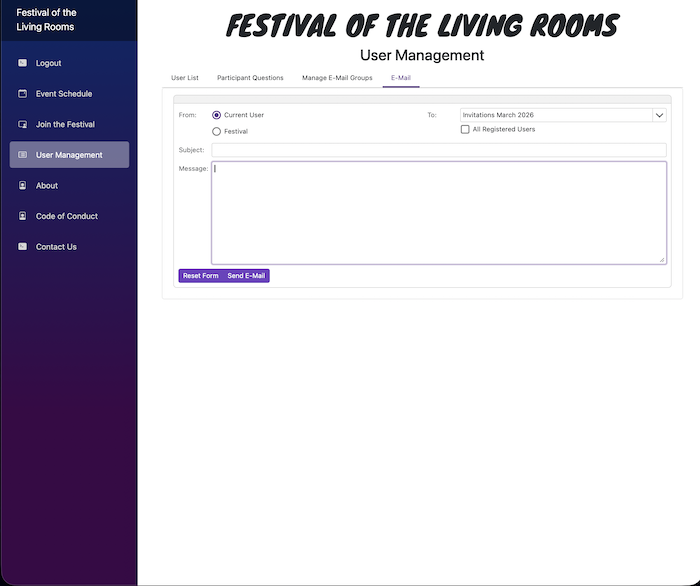
There are a number of functions in the website that are only available to administrators, primarily in the area of user management. One of these functions is the ability for administrators to send e-mails to either selected groups of users or the entire set of registered users. The website does not implement e-mailing capabilities itself - it relies on an independent API to forward e-mails to an outside provider.
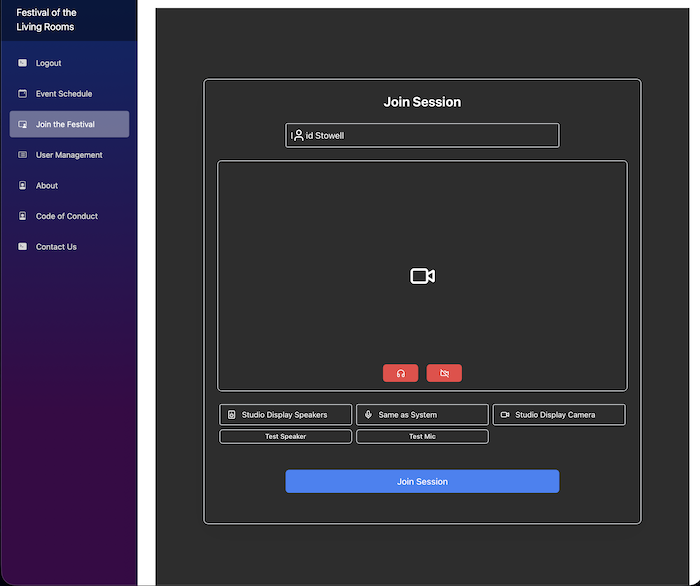
The Zoom experience is embedded in the website itself, rather than being dependent on Zoom's client software. It uses Zoom's Video SDK, which include the advantage of the Zoom experience not being accessible from anywhere other than the website.